Rose Street Advisors Rose Street Advisors
Firm
About UsOur TeamM Financial GroupEducation LibraryCommunity SupportTestimonials
Benefits
Employee Benefit ServicesBenefits FAQBenefits University Blog
HR Consulting
HR Consulting ServicesHR BlogRose Street Recruits
Life Insurance
Life Insurance ServicesLife Happens BlogLife Insurance Vlog
Employer Retirement Plans
Retirement ServicesFiduciary Fitness ProgramGuide to Retirement BlogRetirement Plans FAQ
Wealth Management
Wealth Management ServicesInvestED BlogWealth Management FAQs
Get In Touch
Firm
About UsOur TeamM Financial GroupEducation LibraryCommunity SupportTestimonials
Benefits
Employee Benefit ServicesBenefits FAQBenefits University Blog
HR Consulting
HR Consulting ServicesHR BlogRose Street Recruits
Life Insurance
Life Insurance ServicesLife Happens BlogLife Insurance Vlog
Employer Retirement Plans
Retirement ServicesFiduciary Fitness ProgramGuide to Retirement BlogRetirement Plans FAQ
Wealth Management
Wealth Management ServicesInvestED BlogWealth Management FAQs
Get In Touch


5 Strategies to Reduce Future Required Minimum Distributions (RMDs) Before They Begin

If your retirement savings exceed what's needed to support your lifestyle, required minimum distributions (RMDs) could significantly increase your taxable income and even raise your Medicare premiums. Fortunately, there are strategies to proactively reduce future RMDs or defer them to minimize their impact. Here are the five effective strategies: 

1. Roth Conversions

•  Convert part of your traditional IRA or 401(k) to Roth IRA before reaching RMD age. 

•  Roth IRAs do not have RMDs during your lifetime, and future withdrawals are tax-free. 

•  Conversions will trigger taxes in the year of conversion, but this can be managed by spreading conversions over several years, especially when your taxable          income is lower. 

2. Qualified Charitable Distributions (QCDs)

• Once you reach age 70 1/2, you can donate up to $108,000 annually directly from your IRA to qualified charities. 

• These distributions count toward satisfying your RMDs but are not included in your taxable income. 

• This strategy is ideal if charitable giving is part of your financial plan. 

3. Accelerated Withdrawals

• Take larger withdrawals from your traditional accounts before RMD age to reduce the account balance subject to future RMDs. 

• Withdrawals are taxable, but they may reduce future RMDs and spread out the tax impact over time. 

• Be mindful of staying within your current tax bracket to avoid triggering higher taxes. 

4. Delay Social Security Benefits

• Delaying Social Security until age 70 can reduce taxable income during your early retirement years, allowing more room for tax-efficient Roth conversions or        withdrawals. 

• This also maximizes your Social Security benefits, which can complement other tax-planning strategies. 

5. Shift to Taxable and Tax-Deferred Accounts

• If you're still working or contributiong to retirement accounts, consider redirecting new savings to taxable brokerage accounts or tax-deferred options, such as     health savings accounts (HSAs). 

• Taxable accounts offer flexibility for withdrawals without RMD rules, and HSAs provide tax-free withdrawals for qualified medical expenses. 

Final Thoughts

Planning ahead to manage future RMDs can reduce taxes and prevent surprises in retirement. By implementing these strategies, you can maintain more control over your income and minimize unnecessary tax burdens. 

Scott Higgins | AIF ®, CFP®, CPFA®, NSSA®

Financial Advisor 

Since 2012 at Rose Street, Scott has been responsible for helping the firm’s individual wealth management clients with income strategies for retirement and consulting with employers with their employee retirement plans. In free time, he enjoys golf, biking, skiing, cooking, and traveling. Fun Fact, Scott has a hobby of filling growlers with coins!

Securities and Investment Advisory Services Offered Through M Holdings Securities, Inc., a Registered Broker/Dealer and Investment Adviser, Member FINRA/SIPC. Rose Street Advisors is independently owned and operated. #7548719.1
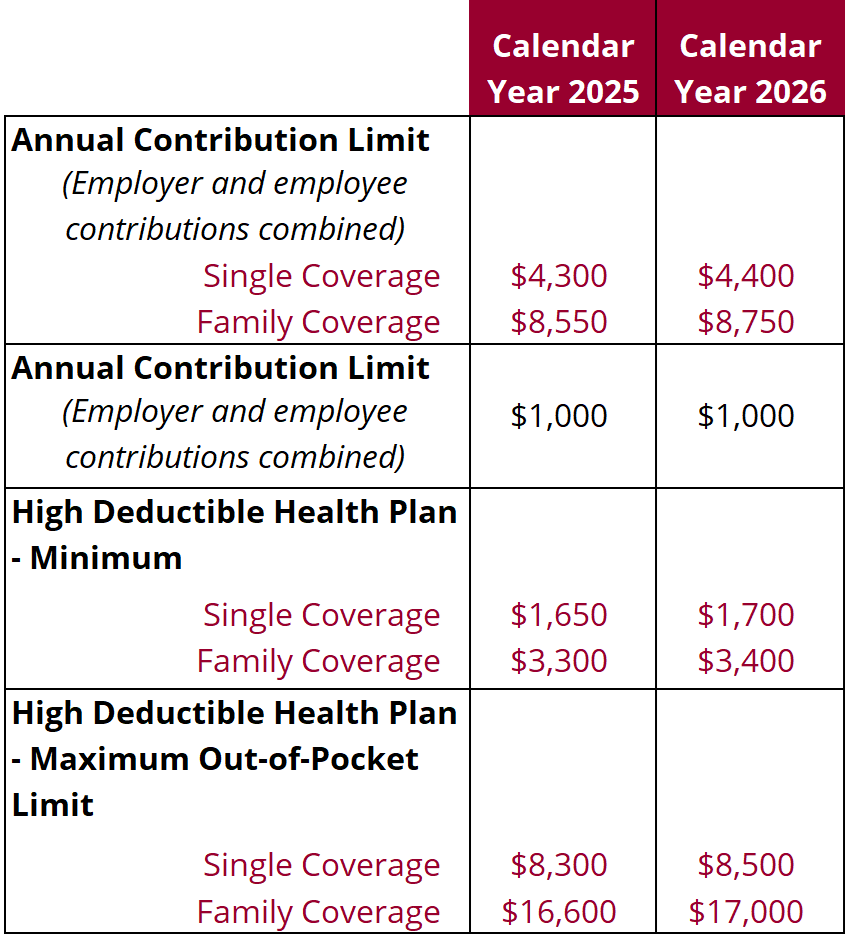
The IRS has released the updated inflation-adjusted limits for health savings accounts (HSAs) and high deductible health plans (HDHPs) for 2026. Annual contribution limits, minimum deductibles for HDHPs, and maximum out-of-pocket expenses will see an increase. However, the additional catch-up contribution limit for individuals aged 55 and older will remain unchanged.

If you have any questions, please reach out to your Relationship Manager at Rose Street Advisors, or email info@rosestreetadvisors.com.

Interested in more?

Let's Talk Proactive HR

Pre-Tax vs. Roth Retirement Savings: What’s the Difference?

When it comes to saving for retirement, choosing between pre-tax and Roth savings options is one of the most important decisions you’ll make. Both have unique benefits, and understanding their differences can help you make a choice that aligns with your financial goals and tax strategy. Let’s break it down:

Pre-Tax Retirement Savings

Contributing to a pre-tax account, such as a traditional 401(k) or IRA, means your contributions are made before taxes are deducted from your income. Keep in mind the annual contribution limits differences in an individual IRA or Roth and those of an employer sponsored retirement plan such as a 401(k).

Key Benefits: 

• Immediate Tax Savings: Your taxable income is reduced in the year of contribution, potentially lowering your tax bill.

• Tax-Deferred Growth: Investments grow without being taxed until you withdraw them in retirement.

• Ideal for Higher Earners: If you’re in a high tax bracket now and expect to be in a lower one during retirement, this option may save you money in the long run.

Consideration: 

• Withdrawals in retirement are taxed as ordinary income.

• Required minimum distributions (RMDs) begin at age 73, forcing you to take taxable withdrawals.

Roth Retirement Savings

Roth contributions, available in accounts like a Roth 401(k) or Roth IRA, are made with after-tax dollars. While there’s no immediate tax deduction, the long-term benefits can be substantial.

Key Benefits: 

•  Tax-Free Withdrawals: Qualified withdrawals of contributions and earnings are completely tax-free in retirement.

•  No RMDs for Roth IRAs, Roth 401(k), Roth 403(b) and 457(b): You’re not required to take distributions during your lifetime, allowing your savings to grow    tax-free indefinitely.

•  Flexibility for Lower Earners: If you’re in a lower tax bracket now, paying taxes upfront may make sense.

Consideration: 

• Contributions don’t reduce your taxable income in the year they’re made

• Recent tax rule changes no longer require RMDs from Roth 401(k) 403(b) 457(b) accounts similar to Roth IRAs.

Which Option is Right for You?

The best choice depends on your current tax situation, future income expectations, and retirement goals:

• If you anticipate being in a lower tax bracket in retirement, pre-tax savings may provide greater benefits.

• If you’re in a lower tax bracket now or want to hedge against future tax increases, Roth savings can offer tax-free income in retirement.

• A mix of both accounts can give you flexibility and diversification to manage taxes effectively in retirement.

• If a high income earner, there are no income limits to make Roth contributions to 401(k), 403(b), and 457(b) accounts.

• If you’re a younger age, a Roth may be advantageous with a longer timeframe to potentially benefit from compounding returns.

Final Thoughts

Understanding the differences between pre-tax and Roth retirement savings is key to building a tax-efficient strategy for the future. By weighing the pros and cons of each option, you can choose a path that helps increase your savings and decrease tax burdens

Julia Sanders | AIF ®,  CPFA®

Retirment Relationship Manager 

Meet Julia, a people-focused life-long learner with several years of experience in the retirement plan industry. Throughout her career, Julia has been committed to maintaining strong client relationships by providing incredible customer service. She is passionate about helping clients define and plan for their retirement goals. Julia’s daily role at the firm energizes and reinforces her commitment to client-focused work.

Securities and Investment Advisory Services Offered Through M Holdings Securities, Inc., a Registered Broker/Dealer and Investment Adviser, Member FINRA/SIPC. Rose Street Advisors is independently owned and operated. #7281457.1

Rose Street Advisors

Your guide from hire to retire. Rose Street Advisors provides the strategy companies need to grow with confidence.

Firm
About UsOur TeamCommunity SupportTestimonials
Services
Employee BenefitsHR ConsultingLife InsuranceEmployer Retirement PlansWealth ManagementFiduciary Fitness
Contact

244 North Rose Street
Kalamazoo, MI 49007

5181 Plainfield Ave NE
Grand Rapids, MI 49525

269.552.3200
© 2026 Rose Street Advisors LLC. All rights reserved.
Securities and Investment Advisory Services Offered Through M Holdings Securities, Inc. A Registered Broker/Dealer and Investment Advisor, Member FINRA/SIPC. Rose Street Advisors is independently owned and operated. Please go to www.mfin.com/DisclosureStatement for further details regarding this relationship. Check the background of this Firm and/or investment professional on FINRA's BrokerCheck. For important information related to M Securities, refer to the M Securities' Client Relationship Summary (Form CRS) by navigating to mfin.com/m-securities. Registered Representatives are registered to conduct securities business and licensed to conduct insurance business in limited states. Response to, or contact with, residents of other states will only be made upon compliance with applicable licensing and registration requirements. The information in this website is for U.S. residents only and does not constitute an offer to sell, or a solicitation of an offer to purchase brokerage services to persons outside of the United States. This site is for information purposes and should not be construed as legal or tax advice and is not intended to replace the advice of a qualified attorney, financial or tax advisor or plan provider. CA Insurance License. File #5757992.1

We value your privacy

We use cookies to keep this site reliable, understand how it’s used, and — with your permission — to personalize content. You can accept all, reject non-essential, or choose which categories to allow.

Privacy Policy

Cookie Preferences