Rose Street Advisors Rose Street Advisors
Firm
About UsOur TeamM Financial GroupEducation LibraryCommunity SupportTestimonials
Benefits
Employee Benefit ServicesBenefits FAQBenefits University Blog
HR Consulting
HR Consulting ServicesHR BlogRose Street Recruits
Life Insurance
Life Insurance ServicesLife Happens BlogLife Insurance Vlog
Employer Retirement Plans
Retirement ServicesFiduciary Fitness ProgramGuide to Retirement BlogRetirement Plans FAQ
Wealth Management
Wealth Management ServicesInvestED BlogWealth Management FAQs
Get In Touch
Firm
About UsOur TeamM Financial GroupEducation LibraryCommunity SupportTestimonials
Benefits
Employee Benefit ServicesBenefits FAQBenefits University Blog
HR Consulting
HR Consulting ServicesHR BlogRose Street Recruits
Life Insurance
Life Insurance ServicesLife Happens BlogLife Insurance Vlog
Employer Retirement Plans
Retirement ServicesFiduciary Fitness ProgramGuide to Retirement BlogRetirement Plans FAQ
Wealth Management
Wealth Management ServicesInvestED BlogWealth Management FAQs
Get In Touch

Managing money has never felt more complex. Rising costs, competing priorities, and the pressure to make smart financial decisions can leave anyone feeling uncertain. If you’ve ever questioned whether you’re budgeting correctly, saving enough, or choosing the right investments, you’re in good company.


That’s why financial wellness matters so much in 2026. It’s not about mastering every financial concept. It’s about having the knowledge, tools, and confidence to make steady, informed decisions, both inside and outside your retirement plan.

Financial Stress Reaches Far Beyond Your Wallet

Money worries don’t stay neatly tucked away at home. They often show up as:


• Difficulty staying focused at work

• Anxiety about surprise expenses

• Doubt about long‑term financial security


Strengthening your financial wellness starts with the fundamentals: understanding your cash flow, building savings habits, and using available resources to reduce stress and improve stability.

Your Retirement Plan Is Just One Piece of the Puzzle

Your workplace retirement plan is a powerful tool for long‑term savings, but it’s not the whole story. Many people still feel unsure about how much to contribute, how to choose investments, or whether pre‑tax or Roth contributions make sense for them.


Financial wellness education helps you:


• Understand how your retirement plan fits into your broader financial life

• Make confident decisions about contributions and investment options

• See retirement savings as part of a larger strategy, not your only strategy


When you understand your plan, it becomes a foundation you can build on, not a source of confusion.

Budgeting and Saving: The Core of Financial Wellness

Before investing beyond your retirement plan, strong budgeting and saving habits create the stability you need. Even small steps can make a meaningful difference:


• Tracking where your money goes

• Building an emergency fund

• Automating savings when possible

• Setting realistic, achievable goals


Financial wellness is about progress, not perfection. Every step you take strengthens your financial foundation.

Investing Beyond Your Workplace Plan

Once your budget and emergency savings are in place, exploring additional investment options can help you grow wealth over time. This might include:


• Individual retirement accounts (Traditional IRA or Roth IRA)

• Brokerage accounts for long‑term investing

• High‑yield savings accounts for short‑term goals

• Health savings accounts (HSAs), if available


Understanding these tools empowers you to build a financial strategy that supports both your present and future needs.

You Don’t Have to Navigate This Alone

Many employers now offer financial education, tools, and resources to help employees make sense of budgeting, saving, and investing. These programs aren’t about judging where you are, they’re about helping you move forward with clarity and confidence.


Using these resources can help you:


• Ask better questions

• Make informed financial decisions

• Align your choices with your personal goals

Looking Ahead

Financial wellness isn’t about quick fixes or perfect decisions. It’s about building habits, understanding your options, and feeling more confident about your financial future.


In 2026 and beyond, small steps, whether improving your budget, increasing savings, or exploring investments outside your retirement plan, can reduce stress and put you on a stronger path for tomorrow.

Scott Higgins | AIF ®, CFP®, CPFA®, NSSA®

Financial Advisor

Securities and Investment Advisory Services Offered Through M Holdings Securities, Inc., a Registered Broker/Dealer and Investment Adviser, Member FINRA/SIPC. Rose Street Advisors is independently owned and operated. #5190109

Interested in more?

Let's Talk Proactive HR

As more employees approach retirement, one question continues to rise to the surface:

“How do I turn my savings into a reliable paycheck?”


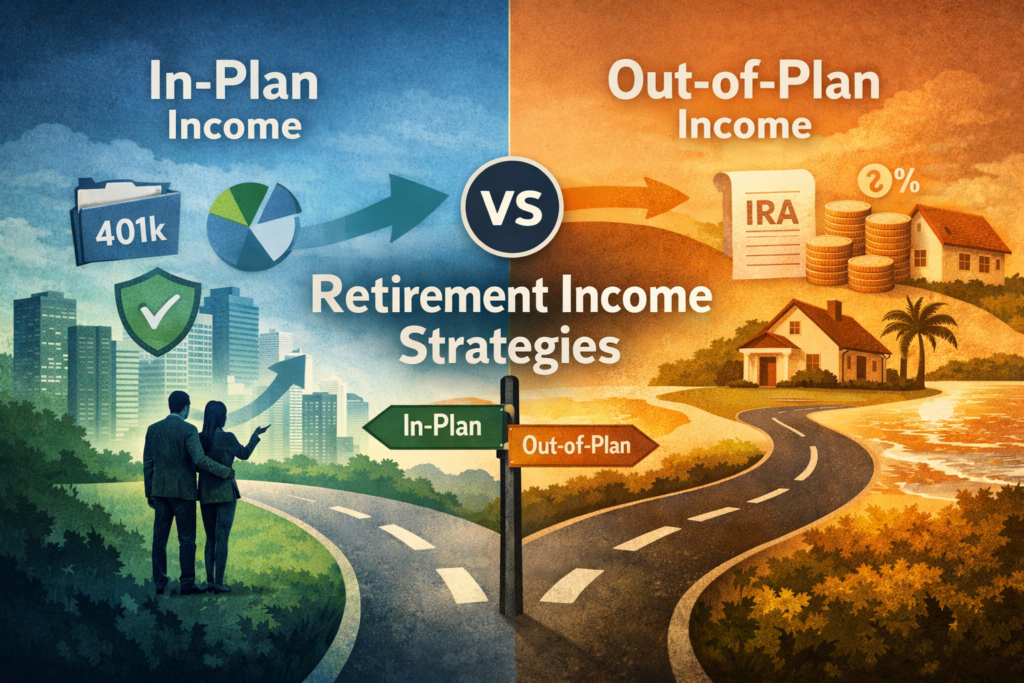
With the passage of the SECURE 2.0 Act, employers now have more flexibility to incorporate in-plan income solutions, including annuities, directly into their retirement plans. At the same time, participants still have access to out-of-plan income strategies once they leave employment or roll over their assets.


For HR leaders and CFOs, this creates both an opportunity and a decision point.

Why Income Guarantees Are Gaining Attention

For years, retirement plans have done an excellent job helping employees accumulate assets. But as retirement gets closer, the focus naturally shifts:

• Will my money last?

• How do I create consistent income?

• What happens if markets decline early in retirement?

Income guarantees, typically through annuity structures, help address these concerns by converting a portion of savings into predictable, often lifetime income.

In-Plan Income Guarantees: Pros and Considerations

What It Means

An in-plan solution allows participants to allocate a portion of their workplace retirement plan into an income product while still inside the plan.


Advantages:


• Simplicity and Access
Participants can elect income features within a familiar environment; no rollover required.


• Institutional Pricing
Plans may offer lower-cost options due to scale and fiduciary oversight.


• Fiduciary Vetting
Plan sponsors evaluate and monitor providers, helping bring a level of due diligence to the selection.


• Behavioral Benefits
Participants are more likely to engage with income solutions when they’re built into the plan experience.


Considerations:


• Fiduciary Responsibility
Adding an income solution introduces ongoing oversight, including insurer selection and monitoring.


• Portability Limitations
Income features may not always transfer seamlessly if an employee changes jobs.


• Plan Complexity
Additional features can increase administrative and communication demands.


• Limited Customization
Plan-based options may not fit every participant’s unique financial situation.

Out-of-Plan Income Guarantees: Pros and Considerations

What It Means

Participants roll assets to an IRA or other vehicle and purchase an income solution independently.


Advantages:


• Flexibility
Participants can tailor income strategies to their personal goals and timelines.


• Broader Selection
The retail marketplace offers a wide range of products and features.


• Portability
Income strategies are not tied to an employer plan.


• Integrated Planning
Allows coordination with tax, estate, and broader financial planning strategies.


Considerations:


• Potentially Higher Costs
Retail pricing may be higher depending on the structure.


• Decision Complexity
Participants must navigate choices without the built-in framework of a plan.


• Advice Dependency
Outcomes often depend on the quality of guidance received.


• Behavioral Risk
Without structure, some participants delay or avoid converting assets into income.

Why Consider One Over the Other?

There’s no one-size-fits-all answer and that’s exactly the point.


In-plan solutions can be especially effective when the goal is to:

• Increase access and participation across the workforce

• Provide a simplified, guided experience

• Leverage fiduciary oversight to support better outcomes


Out-of-plan solutions may be more appropriate when:

• Participants have more complex financial needs

• Customization becomes a priority

• Individuals are working closely with a financial advisor

A Practical Takeaway for Plan Sponsors

This doesn’t have to be an either/or decision.


Forward-thinking employers are increasingly viewing in-plan income as a foundational option, while recognizing that some participants will benefit from more personalized, out-of-plan strategies.


This is where thoughtful plan design and participant guidance come together.


The real opportunity is helping employees make the shift from focusing on how much they’ve saved to understanding how that savings can generate income they can rely on.


That’s where confidence increases and where plan sponsors can make a meaningful impact.

Final Thought

As income solutions continue to evolve, so does the role of the plan sponsor from offering a savings vehicle to supporting a more complete retirement income strategy.


Taking the time to evaluate these options today can help position your plan, and your people, for greater confidence tomorrow.

Scott Higgins | AIF ®, CFP®, CPFA®, NSSA®

Financial Advisor

This material and the opinions voiced are for general information only and are not intended to provide specific advice or recommendations for any individual. To determine waht is appropriate for you, please contact me directly or consult another qualified professional

Securities and Investment Advisory Services Offered Through M Holdings Securities, Inc. A Registered Broker/Dealer and Investment Advisor, Member FINRA/SIPC. Rose Street Advisors is independently owned and operated. #5341149

Interested in more?

Let's Talk Proactive HR

Have you ever noticed how something as simple as toothpaste can tell you a lot about your life?


This morning, I walked into the bathroom and, to my surprise, my toothpaste was exactly where it belonged. Right there. In the drawer. Waiting for me. If you have teenagers in your house, you know that’s not always how it works.


In our home, Kim and I joke that some of our things behave a lot like our old outdoor cat, Oliver. He came and went as he pleased. Some days he’d stick around. Other days, he’d disappear without a trace. That’s pretty much how our stuff operates too. Toothpaste, conditioner, chargers, hoodies… here today, gone tomorrow. You get the idea.


Kim said something this morning that stuck with me. “As frustrating as it is, when the kids are gone, we might actually miss this.”


I told her when that day comes, I’ll gladly take her things and hide them around the house just to keep her on her toes. #winning


But there’s something deeper in that.


We don’t always realize what we’ll miss until it’s gone. And that shows up clearly in retirement.


Most people spend decades focused on the numbers. How much have I saved? Will it be enough? When can I stop working? Important questions, and we help answer them every day. But there’s another question that matters just as much.


What will your days actually feel like when the house is quieter, the calendar is clearer, and everything is exactly where you left it?


I’ve seen it often. People are financially ready, but not fully prepared for the shift. They expected freedom. They got it. What they didn’t expect was the loss of rhythm, noise, responsibility, and even the small frustrations that once filled their days.

Retirement isn’t just a financial transition. It’s a life transition.

The people who navigate it best have taken time to picture it ahead of time. Not just the big trips, but the ordinary Tuesdays.


At Rose Street Advisors, that’s a big part of what we do. Yes, we build income strategies and think through taxes and risk. But we also help clients get clear on the life behind the plan.


What does a great day look like? Who are you spending time with? What are you moving toward? Where does purpose come from when work no longer defines your schedule?


Because retirement without a clear picture can feel a lot like that outdoor cat. A little unpredictable. A little disorienting.


But when you define it, something changes.


You stop reacting… and start living with intention.


So here’s a simple place to start. Picture a random Tuesday in retirement. Not a vacation. Just a normal day.


Where are you?
What are you doing?
Who are you with?


Then ask yourself, if nothing changed between now and then, would that day feel fulfilling?


If not, that’s not a problem. It’s an opportunity. An opportunity to start shaping that future now.


Because the goal isn’t just to have enough.


It’s to build a life you’re excited to live.


And if more people approached retirement this way, I think we’d see fewer people drifting and more people fully stepping into what could be one of the most meaningful seasons of their lives.


And maybe, just maybe, keeping a little of that “outdoor cat” energy along the way.

Jeremy Heavey

AIF ® , NSSA ® | FINANCIAL ADVISOR


Securities and Investment Advisory Services offered through M Holdings Securities, Inc., a Registered Broker/Dealer and Investment Advisor, Member FINRA/SIPC. Rose Street Advisors, LLC is independently owned and operated. File #5321941

Interested in more?

Let's Talk Proactive HR

When meeting with our philanthropically minded clients, we often say, “give cash last.”  Donating cash is simple, but it’s not always the most tax efficient.  As we are nearing the end of the year, many clients plan to make charitable contributions, and it is our job to help make those contributions go as far as possible.  What does this mean for you?  If you have an IRA, investments like stocks or real estate that have appreciated over time, you might be better off donating those instead of cash. Why? Because by donating non-cash assets, you can often avoid capital gains taxes and/or income taxes. In other words, you’ll give more to charity without having to hand over extra cash to the government.  Here are the top 6 ways to get the biggest tax break for your donation:

1. Use Your IRA for Charitable Giving

Do you need to satisfy your Required Minimum Distributions (RMDs) from your IRA?   You can avoid the tax hit from those RMDs by donating directly from your IRA to charity through a Qualified Charitable Distribution (QCD).  Even if you are just 70 ½ and don’t have to take an RMD yet, you still maybe be eligible to give through a QCD.


How It Works:


• Contact your IRA provider and request a direct transfer to a qualified charity (or request a checkbook and write checks to charities yourself!

• The amount you give won’t be counted as taxable income, and it will satisfy your RMD.


Why It’s Smart: It’s a great way to reduce your taxable income while meeting your RMD requirement. It’s especially useful if you don’t need the income from your IRA for living expenses but still want to make a charitable impact.

2. Donate Appreciated Stocks, Bonds, or Mutual Funds

If you’ve got stocks, bonds, etfs or mutual funds in a taxable brokerage account that have increased in value since you bought them, this is one of the best ways to donate. Why?  When you donate these assets directly to a charity, you avoid paying capital gains taxes on the appreciation, and you get a tax deduction for the full market value of the securities.


How It Works:


• Look through your portfolio for any investments that have appreciated.

• Transfer the stocks, bonds, or funds directly to the charity (don’t sell them first).

• The charity then sells the investments tax-free and gets the proceeds to use for their cause.


Why It’s Smart: You avoid paying capital gains tax, so the value of your donation is higher. It’s a win-win—you give more, you get a tax break and the charity gets more.

3. Use a Donor-Advised Fund (DAF)

If you’re looking for flexibility, a donor-advised fund might be the perfect solution.


A DAF allows you to contribute cash or assets like stocks to an account, receive an immediate tax deduction, and then distribute the funds to charities over time. Think of it as your personal charitable giving account that you control. 


Donor Advised Funds are the fastest growing way to donate in the United States.  Because the standard deduction has been much higher in recent years, to get the biggest tax benefit, some investors are ‘bunching’ several years of giving into one tax year, getting the bigger tax benefit in that year, and then making distributions over the next several years. Think of giving more in a 2 year cycle that keeps repeating vs just giving directly from cash each year. 


For example, a donor might contribute $50k in one calendar year, receive the tax break for that year, and then make $25k worth of distributions in that year & another $25k worth of distributions in the next year, then load up the donor advised fund once again for another 2 year cycle.  This allows the donor to take the higher deduction in the year they are “bunching” their donations and the standard deduction in the “off years.”


How It Works:


• Set up a DAF through a sponsoring organization (most major financial institutions offer them).

• Donate assets like stocks or cash to the DAF.

• You get a tax deduction right away and then you can distribute grants to your favorite charities whenever you like.


Why It’s Smart: DAFs give you the freedom to plan your giving. You can invest the assets within the fund and let them grow, potentially increasing the amount you can eventually donate.

4. Give Tangible Personal Property (Art, Collectibles, etc.)

If you own valuable personal items like artwork, real estate, cars, or collectibles, these can also be donated to charity. Depending on the item and how it’s used by the charity, you may be able to deduct either the fair market value or the cost basis of the item.


How It Works:


• Donate items that are of significant value.

• If the charity can use the item (e.g., donating art to a museum), you may be able to deduct the fair market value.

• If the charity sells the item, the deduction might be based on the cost basis (what you originally paid for it).


Why It’s Smart: Donating tangible items can help you offload valuable but non-liquid assets while benefiting from a tax deduction. It’s a great option if you have personal property you no longer need or want.

5. Use Life Insurance

Using life insurance to donate is a great option if you want to make a significant future donation without needing to use other assets. You can either donate a policy you no longer need or make the charity the beneficiary of a current policy.


How It Works:


• Option 1: Transfer ownership of an existing policy to the charity. You may be able to deduct the policy’s cash value at the time of donation and premiums paid.

• Option 2: Name the charity as a beneficiary on a new or existing life insurance policy, ensuring a future gift.


Why It’s Smart: Donating life insurance allows you to make a larger impact over time, using minimal resources now. If you transfer ownership, you may also receive an immediate tax benefit for the policy’s value and any ongoing premiums paid.

6. Charitable Trusts

For those looking to make a significant impact while also planning for their estate, setting up a charitable trust can be a great way to give. There are different types of charitable trusts, such as Charitable Remainder Trusts (CRTs) and Charitable Lead Trusts (CLTs), which allow you to donate assets while retaining an income stream or passing assets to heirs.


How It Works:


• Set up a trust that holds appreciated assets like stocks or real estate.

• A Charitable Remainder Trust (CRT) provides you or your beneficiaries with income for a set period, and the remainder goes to the charity.

• A Charitable Lead Trust (CLT) directs income to the charity for a set time, after which the remainder goes to your heirs.


Why It’s Smart: Charitable trusts allow you to make a significant contribution while receiving tax benefits and potentially providing for your family. They are a great tool for those with complex financial or estate planning goals.

Final Thoughts

If you’re an investor, donating cash should be your last resort. By giving appreciated securities, real estate, personal property, a life insurance policy or leveraging tools like IRAs or charitable trusts, you can have more money be received by non-profits and realize significant tax advantages. The “give cash last” mentality allows you to do more with what you already have, making a bigger difference for the causes you care about while being smart with your financial resources.  Before you write that next check to charity, consider how some of your investments can reach even further….and get you a bigger tax break.  Want to explore your options? Let’s chat.

Jeremy Heavey

AIF ® , NSSA ® | FINANCIAL ADVISOR

This material and the opinions voiced are for general information only and are not intended to provide specific advice or recommendations for any individual or entity. To determine what is appropriate for you, please contact your Rose Street Financial Professional. Information obtained from third-party sources are believed to be reliable but not guaranteed.  The tax and legal references attached herein are provided with the understanding that neither M Financial Group, nor its Member Firms are engaged in rendering tax, legal, or actuarial services. If tax, legal, or actuarial advice is required, you should consult your accountant, attorney, or actuary. Neither M Financial Group, nor its Member Firms should replace those advisors.


Securities and Investment Advisory Services offered through M Holdings Securities, Inc., a Registered Broker/Dealer and Investment Advisor, Member FINRA/SIPC. Rose Street Advisors, LLC is independently owned and operated. File #5354095

Interested in more?

Let's Talk Proactive HR

Rose Street Advisors is honored to be recognized once again by the National Association of Plan Advisors (NAPA) as one of the nation’s Top Defined Contribution (DC) Advisor Teams. This marks our fourth consecutive year receiving this distinction, an achievement that reflects our continued commitment to delivering exceptional retirement plan guidance to employers and their employees.


Among the 373 teams recognized nationwide, only 21 are located in Michigan, and we are the only firm in Kalamazoo to earn a place on this year’s list. For us, this recognition is more than a milestone; it is a meaningful affirmation of the work we do every day to support organizations, strengthen retirement outcomes, and serve as a trusted partner to leadership teams and plan participants alike.

A Team Built on Purpose and Partnership

Our retirement plan advisory team, led by Scott Higgins, AIF®, CFP®, CPFA®, NSSA®, Financial Advisor, and supported by Julia Sanders, AIF®, CPFA®, Retirement Relationship Manager, brings a disciplined, service‑driven approach to every plan we support. Their work spans fiduciary guidance, plan design consultation, investment due diligence, and participant education, all delivered with a focus on clarity, responsiveness, and long‑term impact.


Within our firm, we often return to a guiding principle that shapes our culture and our client experience:


“What we do and how we do it matters.”


This mindset influences how we prepare for meetings, how we communicate complex topics, and how we support organizations navigating the evolving retirement landscape. It’s a reminder that technical expertise is essential, but the way we show up for clients is equally important.

Recognition That Reflects Real-World Impact

NAPA’s Top DC Advisor Teams list highlights firms with at least $100 million in defined contribution assets under advisement and recognizes teams that demonstrate leadership, consistency, and meaningful contributions to the private retirement system. Unlike broader industry rankings, this list focuses on the work of individual teams within a single physical location—making it a direct reflection of the service we provide to employers and participants in our region.


We are grateful for the trust our clients place in us and remain committed to helping organizations build stronger, more confident retirement futures for their employees.


2026 NAPA Top DC Advisor Teams, created by NAPA. Presented in March 2026 for the previous year. All NAPA members with over $100 million in defined contribution assets under advisement made the list. 372 Advisors were recognized. Advisors pay a fee to hold out marketing materials. Not indicative of advisor’s future performance. Your experience may vary. Click here for the most recent award information.

This material and the opinions voiced are for general information only and are not intended to provide specific advice or recommendations for any individual. To determine waht is appropriate for you, please contact me directly or consult another qualified professional

Securities and Investment Advisory Services Offered Through M Holdings Securities, Inc. A Registered Broker/Dealer and Investment Advisor, Member FINRA/SIPC. Rose Street Advisors is independently owned and operated. #5364245

Interested in more?

Let's Talk Proactive HR

Retirement is one of life’s biggest transitions. Your paycheck may stop, but your expenses don’t. And your time, priorities, and goals often shift in meaningful ways. If you’ve never created a formal budget before, you’re not alone. Many people haven’t needed one during their working years.


The good news? It’s never too late to put a simple, flexible plan in place that helps you feel confident about your spending and your future.


Here are some practical tips to help you build, and stick to, a retirement budget that works for you.

1. Start with What You Spend Today

Before building a retirement budget, take a look at your current spending. This gives you a realistic baseline.


Focus on:


• Housing (mortgage/rent, taxes, insurance)

• Food and utilities

• Transportation

• Insurance and healthcare

• Discretionary spending (travel, hobbies, dining)


From there, adjust for what will change in retirement as some costs may go down (commuting, work expenses), while others may increase (healthcare, travel, leisure).

2. Separate “Needs” from “Wants”

A helpful way to simplify budgeting is to divide expenses into two categories:


• Needs: Essential expenses you must cover (housing, food, insurance, basic healthcare)

• Wants: Lifestyle choices (travel, entertainment, gifts, dining out)


This approach gives you flexibility. In years when markets are volatile or unexpected expenses arise, you can adjust discretionary spending without disrupting your core lifestyle.

3. Plan for Healthcare… More Than You Expect

Healthcare is often one of the most underestimated retirement expenses.


Be sure to account for:


• Medicare premiums and supplemental coverage

• Out-of-pocket costs (deductibles, prescriptions, dental/vision)

• Potential long-term care needs


Building a cushion here can help avoid surprises later.

4. Build in a “Buffer Zone”

Life rarely follows a perfect plan. Home repairs, helping family, or simply wanting to take an extra trip can all impact your budget.


A good rule of thumb is to include a buffer (5–10%) in your annual spending plan. This creates breathing room and reduces the stress of unexpected costs.

5. Align Your Budget with Your Income Strategy

Your retirement income may come from multiple sources:


• Workplace retirement plans (401(k), 403(b))

• Social Security

• IRAs or taxable accounts


The key is making sure your withdrawal strategy aligns with your spending needs so your money lasts while still supporting the lifestyle you want.


This is where thoughtful planning really matters; balancing reliable income with flexibility for the years ahead.

6. Revisit and Adjust Each Year

Your retirement budget isn’t a one-time exercise.  It’s a living plan.


Each year, take a few minutes to review:


• Changes in spending

• Market performance

• Income sources

• Life goals or priorities


Small adjustments over time can make a big difference in keeping your plan on track.

Final Thoughts

Creating a retirement budget isn’t about restricting your lifestyle.  It’s about giving yourself clarity and financial confidence. When you know where your money is going and how it supports your goals, it becomes much easier to enjoy retirement without second-guessing every decision.


If you haven’t created a budget yet, that’s okay. Starting now, even with a simple outline, is a powerful step toward making the most of the years ahead.

Scott Higgins | AIF ®, CFP®, CPFA®, NSSA®

Financial Advisor

This material and the opinions voiced are for general information only and are not intended to provide specific advice or recommendations for any individual. To determine waht is appropriate for you, please contact me directly or consult another qualified professional

Securities and Investment Advisory Services Offered Through M Holdings Securities, Inc. A Registered Broker/Dealer and Investment Advisor, Member FINRA/SIPC. Rose Street Advisors is independently owned and operated. #5341120

Interested in more?

Let's Talk Proactive HR

Have you seen Billy Madison starring Adam Sandler?  Do you remember the premise? His dad built a massive business and wanted to hand it over to his son… while Billy was busy having a full argument between shampoo and conditioner.


It’s funny because it’s exaggerated. But it also lands because there’s a real question underneath it.


What happens when something significant gets handed to someone who isn’t ready for it?


There’s a statistic that gets quoted often in our industry. Roughly 70% of wealthy families lose their wealth by the second generation, and about 90% by the third.


Not because people didn’t work hard. Not because there wasn’t enough. But because something didn’t carry forward.


So the real question isn’t just how to pass wealth on.


It’s this:

How do you prepare them for it?
How do you make sure what you built is amplified—not quietly diluted—in the next generation?


And when you’ve spent decades getting here, that question matters.


A client said something to me recently that stuck.


“We’ve spent decades building this. I’m just not sure our kids understand what it represents.”


Not from a control standpoint. From a place of respect for what it took to build it. If you step back for a moment, what you’ve built didn’t happen by accident. It took discipline, trade-offs, tough decisions that weren’t always obvious in the moment and staying steady when things were uncertain.


You earned the position you’re in. And because of that, your kids have grown up with more stability, more options and fewer constraints.


That’s something to be proud of.


At the same time, it creates a natural gap. They didn’t have to go through what you did to get here.


So it’s worth asking:

• What are they picking up from that difference?
• How do they view money, effort, and responsibility?
• Do they see this as something to build on—or something that will always be there?


Not because anything is wrong. But because they’ve had a different starting point.


And that shapes how things are interpreted.

The Real Question

The wealth didn’t just appear. It followed a way of operating.


Consistency, discipline, integrity and a willingness to do hard things over time. The ability to stay steady when others didn’t. Those weren’t side traits. They were the reason it worked.


So it’s fair to ask:

If those don’t carry forward, why would we expect the outcome to?


And if they did carry forward, what might that make possible?

Start Here

Most people have never actually defined what drove their success. They lived it, but they haven’t put clear language around it.


A simple place to begin:


Look backward.


Think about decisions you’re proud of. Not financially—personally. What did those moments have in common?

Then separate results from behavior.


The outcome isn’t the lesson. The behavior that created it is.

And make it clear. Not just “work ethic,” but what that actually looked like in your life.


If it’s clear to you, it becomes easier for someone else to understand.


And once that clarity is there, the next step becomes more practical.

Then, Over Time

This isn’t about one conversation. It’s about what gets seen and picked up along the way.


Let them see how you think through decisions. Not just what you chose, but how you got there.


Give them responsibility in ways that fit where they are. Confidence tends to follow experience.


Connect money to purpose. What it’s for, what it supports, what it doesn’t replace. And bring them along gradually. Not all at once, but not all at the end either.


Over time, that builds something more valuable than information. It builds judgment. And this is where planning starts to look a little different.


At our firm, this is part of the conversation. Not just the numbers, not just the portfolio, but how everything connects to the people behind it. Because a well-built plan isn’t just about growing assets. It’s about preparing the people those assets are meant to serve.

You

Over the next few months, pay attention to the moments where your values naturally show up. When you make a decision, when something doesn’t go as planned or when you choose the harder path.


Instead of letting those moments pass, make them visible. A quick explanation or a story when it fits. Letting them see how you think in real time. If you did that consistently, what might they begin to understand? Not just about money. But about how to operate when it matters.


If more families approached it this way, wealth would carry something more with it. Not just assets, but understanding.


We’d likely see more examples of it being built upon, not just maintained—or lost. Not because the opportunities were different, but because the people stepping into them were ready.


That’s what ultimately determines whether something lasts.


And if this is something you’ve been thinking about, give us a call.  It’s worth continuing the conversation. Because getting this right doesn’t happen by accident—and it’s too important to leave to chance.

Jeremy Heavey

AIF ® , NSSA ® | FINANCIAL ADVISOR


Securities and Investment Advisory Services offered through M Holdings Securities, Inc., a Registered Broker/Dealer and Investment Advisor, Member FINRA/SIPC. Rose Street Advisors, LLC is independently owned and operated. File #5321675

Interested in more?

Let's Talk Proactive HR

For HR leaders, finance professionals and retirement plan committees, sponsoring a 401(k) or 403(b) plan is both a valuable employee benefit and an important fiduciary responsibility. Plan sponsors must ensure that their plan operates in the best interests of participants while maintaining reasonable fees, competitive investments and quality services.


One of the most effective ways to evaluate the health of a retirement plan is through benchmarking. Benchmarking allows plan sponsors to compare their plan’s fees, services, investments, and design features to similar plans in the marketplace. The insights gained can help identify opportunities to improve the plan and demonstrate responsible oversight.

What Is Retirement Plan Benchmarking?

Benchmarking is the process of comparing your retirement plan against similar plans based on factors such as:


• Total plan assets

• Number of participants

• Industry type

• Plan features and services


The goal is to determine whether your plan’s costs and services are reasonable and competitive. Benchmarking also supports fiduciary oversight under the Employee Retirement Income Security Act, which requires plan fiduciaries to act prudently and ensure plan fees are reasonable relative to the services provided.

Why Benchmarking Is Important

Demonstrates Fiduciary Responsibility


Benchmarking provides documentation that plan sponsors are reviewing plan costs and services on a regular basis. This process helps support a prudent decision-making framework.


Evaluates Plan Fees


Retirement plan fees can vary widely depending on plan size and service structure. Benchmarking helps determine whether costs such as recordkeeping, advisory, and investment fees are reasonable compared with similar plans.


Improves Participant Outcomes


Benchmarking often uncovers opportunities to improve the plan, such as:

• Lower-cost investment options

• Additional participant education resources

• Enhanced retirement planning tools

• New plan features like automatic enrollment

Even small improvements can have a meaningful impact on long-term retirement savings.


Key Types of Retirement Plan Benchmarking


Plan sponsors typically review several different aspects of their retirement plan during benchmarking.


Fee Benchmarking


Fee benchmarking evaluates the overall cost of the plan relative to similar plans. Areas reviewed may include:


• Record keeping and administrative fees

• Investment expense ratios

• Advisor compensation

• Total plan cost per participant


This type of benchmarking is commonly conducted every one to three years.


Investment Benchmarking


Investment benchmarking reviews the plan’s investment lineup to ensure funds remain competitive and appropriate for participants. Committees often evaluate:


• Fund performance relative to benchmarks

• Expense ratios

• Risk characteristics

• Availability of lower-cost share classes


Investment monitoring is often performed quarterly or semiannually.


Service Benchmarking


Service benchmarking evaluates the quality and scope of services provided by vendors such as record keepers and advisors.


This may include reviewing:


• Participant education programs

• Retirement readiness tools

• Call center support

• Technology platforms and mobile access

• Plan administration support


Ensuring participants have access to strong resources can improve engagement and retirement readiness.


Plan Design Benchmarking


Plan design benchmarking compares your plan’s structure and features against industry norms such as:


• Employer matching contributions

• Auto-enrollment and auto-escalation features

• Vesting schedules

• Eligibility rules


Understanding how your plan compares to others can help ensure your retirement benefit remains competitive for attracting and retaining employees.


Request for Proposal (RFP)


A Request for Proposal is a comprehensive benchmarking process where plan sponsors invite multiple providers to submit proposals for plan services. This process evaluates pricing, services, technology, and overall value.


An RFP allows plan sponsors to test the marketplace and confirm whether their current provider remains competitive. Many organizations conduct an RFP every three to five years.

Final Thoughts

Benchmarking is an essential part of responsible retirement plan management. By regularly evaluating fees, investments, services, and plan design, plan sponsors can ensure their retirement plan continues to provide strong value for participants.


Regular reviews also help demonstrate fiduciary prudence and identify opportunities to strengthen the plan over time.


If your organization hasn’t reviewed its retirement plan recently, now may be the time.  Consider working with your advisor or retirement plan consultant to conduct a benchmarking review of your 401(k) or 403(b) plan to ensure it remains competitive, cost-effective, and positioned to support your employees’ long-term retirement goals.

Scott Higgins | AIF ®, CFP®, CPFA®, NSSA®

Financial Advisor

This material and the opinions voiced are for general information only and are not intended to provide specific advice or recommendations for any individual. To determine waht is appropriate for you, please contact me directly or consult another qualified professional


Securities and Investment Advisory Services Offered Through M Holdings Securities, Inc. A Registered Broker/Dealer and Investment Advisor, Member FINRA/SIPC. Rose Street Advisors is independently owned and operated. #5299035 

Interested in more?

Let's Talk Proactive HR

Steady Oversight and a Disciplined Process

Recent geopolitical developments have understandably raised questions about how global conflicts may affect financial markets. Periods like these can create uncertainty and volatility, and part of our responsibility as your advisors is to watch developments closely while keeping portfolios aligned with long-term objectives.


While headlines can feel unsettling, history shows that markets have navigated wars and geopolitical conflicts many times before. Keeping that historical perspective and remaining committed to a disciplined investment process helps guide decision-making during uncertain periods.

Stock Markets

• In the short term, markets often experience heightened volatility. Uncertainty around trade, energy markets and global supply chains can lead to sharp price swings


• Over the longer term, equity markets have historically recovered and moved higher. Wars can stimulate certain industries such as defense, manufacturing and infrastructure. Governments often implement policies designed to support economic stability and recovery.


Historical perspective and recovery timelines:


• During World War II, U.S. stocks dropped sharply following the attack on Attack on Pearl Harbor in December 1941. The decline was relatively brief; by mid-1942 markets had stabilized, and by 1943 equities were trending higher. The S&P 500 then moved into a multi-year expansion that continued through the post-war economic boom.


• During the Gulf War, the S&P 500 declined roughly 15–17% between July and October 1990 as oil prices spiked and uncertainty increased. Once the U.S.-led coalition began military operations in January 1991, markets recovered quickly. Within about six months of the market low, equities had regained their losses and continued advancing through the early 1990s expansion.


• During the Iraq War, markets had already been under pressure due to the bursting of the tech bubble and broader economic uncertainty. The S&P 500 bottomed in March 2003, almost exactly when the invasion began, and rose more than 25% over the following 12 months. That recovery marked the beginning of a broader bull market that lasted until 2007.

Bond Markets

• Government bonds are often viewed as a “flight to safety” during periods of conflict. When investors seek stability, demand for bonds can increase and yields may decline.


• At the same time, large government spending during wartime can introduce inflation pressures, which may influence interest rates and bond market dynamics.

Our Investment Management Philosophy

Even during uncertain times, our investment decisions remain guided by a disciplined philosophy focused on long-term outcomes rather than short-term headlines. Portfolios are constructed around each client’s goals, risk tolerance, and time horizon, using the information gathered through our discovery process and risk assessment tools.


Risk and return are related and building wealth over time requires staying invested and allowing capital to work through market cycles. Our approach emphasizes time in the market rather than attempting to time short-term movements. Instead of chasing individual “hot” investments or trying to predict market turning points, we focus on disciplined portfolio construction, broad diversification, and strategic allocation.

While geopolitical conflicts can create uncertainty in the short term, history reminds us that markets have faced many similar periods. It is important to remain disciplined in portfolio management, diversification and continue to stay aligned with your long-term financial goals.

Jeremy Heavey

AIF ® , NSSA ® | FINANCIAL ADVISOR

Scott Higgins

AIF ® , CFP ®, CPFA ®, NSSA ® | FINANCIAL ADVISOR


Securities and Investment Advisory Services offered through M Holdings Securities, Inc., a Registered Broker/Dealer and Investment Advisor, Member FINRA/SIPC. Rose Street Advisors, LLC is independently owned and operated. File #5303566

Interested in more?

Let's Talk Proactive HR

For many retirees, Social Security is a foundational source of income—yet most people claim without fully understanding how their timing and strategy can impact lifetime benefits. By learning how different claiming options work, you can make a more informed decision that supports your long-term financial goals.

1. Know Your Full Retirement Age (FRA)

Your FRA is the age at which you qualify for 100% of your Social Security benefit. Claiming before FRA (at age 62 or later) reduces monthly benefits permanently. Waiting until FRA or beyond increases your monthly income and can provide more stability later in retirement.


2. Consider Delaying Benefits for Higher Lifetime Income

If you delay Social Security past your FRA, benefits grow by roughly 8% per year until age 70. This strategy can be especially impactful for individuals with longer life expectancies or families with longevity. Delaying can also strengthen survivor benefits for a spouse.


3. Evaluate Spousal Strategies

Married couples have more flexibility in how they claim. One spouse may claim earlier to provide income while the higher-earning spouse delays their benefit for maximum growth. Understanding how spousal and survivor benefits work can help couples significantly increase total household benefits.


4. Integrate Social Security Into Your Broader Retirement Plan

Choosing when to claim shouldn’t happen in a vacuum. Factors like part-time work, pension income, tax considerations, and required minimum distributions all affect the optimal strategy. Coordinating Social Security with your savings and spending plan can help stretch your retirement dollars further.


5. Avoid Earning Penalties if You Claim Early

If you claim before FRA and continue working, Social Security may temporarily withhold some of your benefits once you exceed annual earnings limits. This isn’t a penalty, you’ll eventually receive credit for those reductions, but understanding the rules can prevent surprises.


6. Review Annually and Adjust if Needed

Life changes such as marriage, divorce, widowhood, health changes can all impact your eligible benefits. Regularly reviewing your strategy ensures you take advantage of every opportunity available.


Scott Higgins | AIF ®, CFP®, CPFA®, NSSA®

Financial Advisor

Securities and Investment Advisory Services Offered Through M Holdings Securities, Inc., a Registered Broker/Dealer and Investment Adviser, Member FINRA/SIPC. Rose Street Advisors is independently owned and operated. #5059445

Interested in more?

Let's Talk Proactive HR
Next Page »
Rose Street Advisors

Your guide from hire to retire. Rose Street Advisors provides the strategy companies need to grow with confidence.

Firm
About UsOur TeamCommunity SupportTestimonials
Services
Employee BenefitsHR ConsultingLife InsuranceEmployer Retirement PlansWealth ManagementFiduciary Fitness
Contact

244 North Rose Street
Kalamazoo, MI 49007

5181 Plainfield Ave NE
Grand Rapids, MI 49525

269.552.3200
© 2026 Rose Street Advisors LLC. All rights reserved.
Securities and Investment Advisory Services Offered Through M Holdings Securities, Inc. A Registered Broker/Dealer and Investment Advisor, Member FINRA/SIPC. Rose Street Advisors is independently owned and operated. Please go to www.mfin.com/DisclosureStatement for further details regarding this relationship. Check the background of this Firm and/or investment professional on FINRA's BrokerCheck. For important information related to M Securities, refer to the M Securities' Client Relationship Summary (Form CRS) by navigating to mfin.com/m-securities. Registered Representatives are registered to conduct securities business and licensed to conduct insurance business in limited states. Response to, or contact with, residents of other states will only be made upon compliance with applicable licensing and registration requirements. The information in this website is for U.S. residents only and does not constitute an offer to sell, or a solicitation of an offer to purchase brokerage services to persons outside of the United States. This site is for information purposes and should not be construed as legal or tax advice and is not intended to replace the advice of a qualified attorney, financial or tax advisor or plan provider. CA Insurance License. File #5757992.1

We value your privacy

We use cookies to keep this site reliable, understand how it’s used, and — with your permission — to personalize content. You can accept all, reject non-essential, or choose which categories to allow.

Cookie Preferences